Choosing a SCADA platform is a five-to-ten-year architecture decision, not just a screen-design decision. This guide compares public pricing and licensing models for Ignition, AVEVA InTouch, Siemens WinCC Unified, zenon by COPA-DATA and Rockwell FactoryTalk View SE.
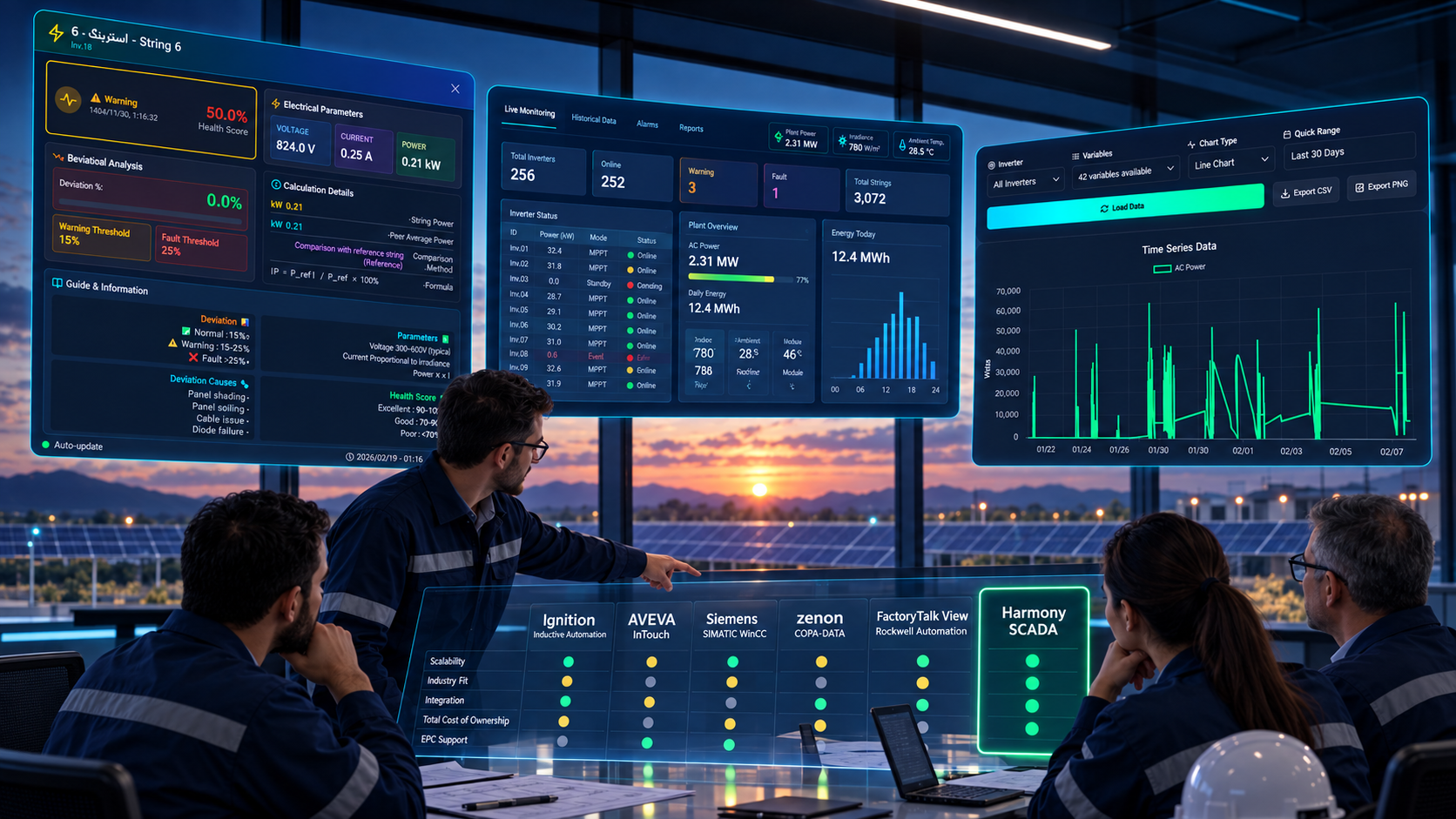
Public pricing comparison
Prices below are public MSRP or list prices in USD. They exclude tax, hardware, engineering, commissioning, training and local distributor costs.
| Platform | Public price | Licensing model | Cost note |
|---|---|---|---|
| Ignition | Platform: $1,200; Application Building: $13,500; Historian: $3,500; Alarm Management: $3,200 | Mostly perpetual and per server; unlimited clients and tags in paid editions | BasicCare, TotalCare and PriorityCare support are 16%, 20% and 24% annually |
| AVEVA InTouch | Workstation: $1,850; Unlimited Standard: $12,360; Unlimited Professional: $20,600 | Limited Workstation; Unlimited packages for larger deployments | AVEVA lists these as US MSRP excluding tax and freight |
| Siemens WinCC Unified | No single public project price; depends on Engineering, Runtime and PowerTag/Logging Tag count | Engineering and Runtime licenses by capacity and feature | Logging-tag capacity has a direct impact on the bill of materials |
| FactoryTalk View SE | No single public project price; quote/distributor based | Node-locked or floating/concurrent; clients and servers are part of the SKU mix | Review ViewPoint, FactoryTalk Linx and related components separately |
| zenon (COPA-DATA) | No single public price for every edition; quote depends on Runtime, Engineering, tags and modules | Engineering and Runtime licensing by capacity and module | Include Historian, redundancy and web visualization in the bill of materials |
What matters for a solar plant?
A solar SCADA system should collect inverter, combiner, pyranometer, tracker, BESS and network data; expose stale/offline states; manage alarms and history; calculate PR, availability and losses; generate reports; and support string monitoring, MMS, revenue, SLD and AI/RAG workflows.
Harmony SCADA is designed specifically for photovoltaic plants and brings these workflows into one web interface. The meaningful comparison is therefore total cost of ownership: software, modules, engineering, integration and five-year maintenance.
What makes Harmony SCADA distinctive for solar plants?
- PV-native data model: inverters, combiners, pyranometers, trackers, BESS and network equipment in one operational model.
- String mismatch detection: health score, peer comparison and DC alarms expose production loss early.
- IT/OT in one view: polling health, network topology, SNMP UPS and production KPIs together.
- Operations-to-decision workflow: PR/loss reports, MMS, tariff-based revenue, SLD/HMI and AI Diagnostics/RAG.
- Iran-ready localization: Persian and multilingual UI, Jalali calendar, toman revenue and local-network operation.
For the Iranian market, projects that need high capability together with a competitive total cost and close engineering support can find Harmony SCADA a strong alternative to assembling several foreign licenses. The final decision should still be based on the project's requirements and TCO.
Five-year TCO checklist
TCO = initial license + support/upgrades + engineering/commissioning + hardware + training + change requests
Before requesting a quote, specify live and historian tags, sites, clients, redundancy, protocols, web/mobile access, notifications, training and OT-security requirements.